
Loading...
Serving Walnut, CA and surrounding areas. (909) 546-5193
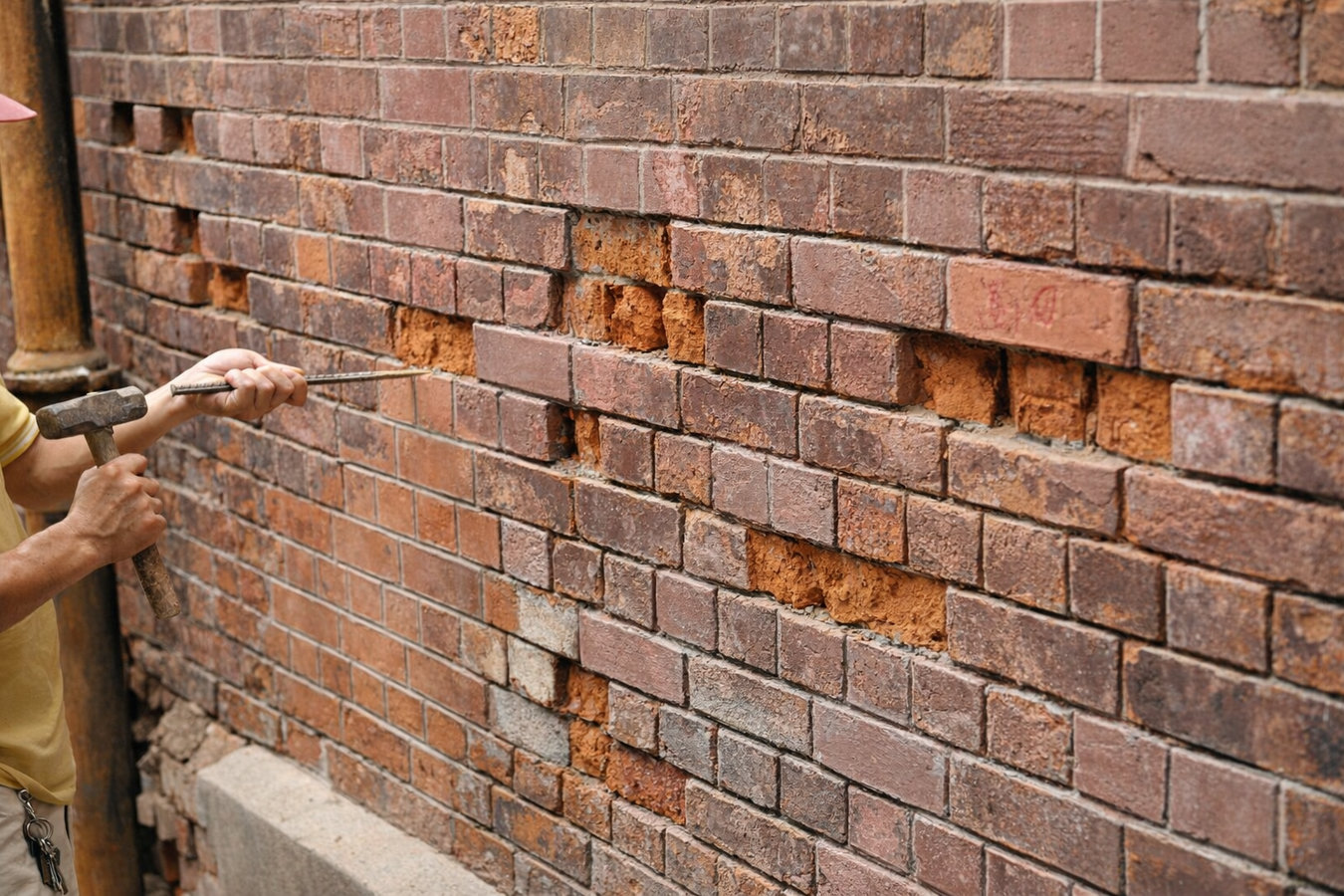
Cracked bricks, crumbling mortar, and damaged chimneys do not fix themselves. We find the problem, match your existing materials, and repair it so the work blends in and holds up.
Brick repair in Walnut, CA typically means fixing individual damaged bricks, replacing crumbling mortar, or patching small cracks - not tearing out an entire wall - and most jobs on a single-family home are completed in one to two days on-site.
The mortar between bricks is designed to fail before the bricks themselves do - it is the sacrificial layer that absorbs stress. That means most brick issues in Walnut homes are really mortar issues, and replacing the mortar is far less expensive than rebuilding a wall. Walnut saw a significant surge in brick construction during the 1970s and 1980s, when chimneys, garden walls, planters, and entry features were built as standard features on single-family homes. That brick is now 40 to 50 years old, and the mortar joints have been through hundreds of heat cycles and seasonal shifts since then. If the mortar joints throughout the wall are the main problem rather than the bricks themselves, our masonry restoration service covers broader restoration work when multiple systems need attention at once.
Run your finger along the joints between bricks on your chimney, garden wall, or exterior brick accent. If the material crumbles away easily, feels sandy, or has gaps you can push your finger into, the mortar has broken down. This is the most common sign that repointing is needed, and it is very fixable before it becomes a bigger problem.
If you noticed new cracks in a brick wall or chimney after a tremor - even a small one - or after an unusually hot, dry period, that is a signal worth acting on. In Walnut's climate and geology, both of these stressors are common, and small cracks can widen quickly once they start. A crack wider than about the thickness of a credit card deserves a professional look.
That chalky white residue on older brick walls is called efflorescence - it is salt being carried to the surface by water moving through the wall. It tells you that water is getting into the brick or mortar somewhere. In Walnut, this often shows up on north-facing walls or near irrigation systems that spray onto brick surfaces, and it means a mortar joint has already failed.
When the outer face of a brick starts to flake off in thin layers, moisture has been getting in and out repeatedly over many years. In Walnut's heat, this process accelerates on south- and west-facing walls that get the most sun. Once bricks start spalling like this, they cannot be patched - they need to be replaced - so catching it early saves significantly on repair costs.
Every brick repair job starts with a clear-eyed assessment of what is actually wrong. Sometimes the bricks themselves are the problem - cracked, spalled, or structurally compromised - and they need to be replaced with units that match as closely as possible in color and texture. More often, the bricks are fine and the mortar joints are the issue, in which case repointing is the right approach: grinding out the old material, cleaning the joint, and packing in fresh mortar. For chimneys, we also check the cap and flashing while we are up there, because water getting in from the top is often what accelerated the damage lower down.
If the damage has reached the point where a driveway, walkway, or other hardscape connected to the brickwork is also affected, our driveway pavers service can handle the surrounding hardscape as part of the same project scope. We always provide a written estimate before any work begins, so you know exactly what is included and what it will cost.
Best when the bricks are still solid but the joints between them have crumbled or cracked - the most common repair on Walnut homes from the 1970s and 1980s.
Suited for walls where individual bricks are cracked, spalled, or structurally compromised and need to be swapped out and matched to the surrounding work.
For chimneys showing mortar failure, cracked bricks, or a damaged cap - often the highest-priority repair because chimneys take the most direct weather exposure.
Addresses the white staining that signals water movement through masonry, and applies a breathable water repellent to slow future moisture intrusion.
Walnut's hot, dry summers - with temperatures regularly reaching the mid-90s from June through September - cause mortar to dry out and shrink over time. When mortar shrinks, small gaps open up, and those gaps let water in during the winter rain season. This back-and-forth cycle is one of the main reasons brick and mortar in Walnut neighborhoods needs attention every 15 to 25 years, even on well-built homes. Add in the clay-heavy soils near the Puente Hills that expand when wet and contract when dry, and you have a combination of stressors that wears masonry down faster than most homeowners realize. Homeowners in Rowland Heights, CA deal with essentially the same conditions, since the geology and housing stock are similar across that part of the valley.
Southern California seismic activity adds another layer. Even small tremors that barely register on a news report can widen cracks in brick that were already weakened by age and weather. After any noticeable shaking, it is worth walking your property and looking at chimneys, garden walls, and brick planters for new gaps or shifted bricks. Homeowners near Diamond Bar, CA and throughout the eastern San Gabriel Valley are subject to the same seismic exposure. The Chimney Safety Institute of America recommends a chimney inspection after any significant seismic event, even if the damage is not visible from the ground.
You do not need to know the technical name for what is wrong - just describe what you are seeing. We ask a few basic questions about where the damage is and how large an area is affected. This call takes five to ten minutes and costs you nothing. We respond within 1 business day.
We schedule a free on-site visit, walk the affected area with you, and explain what we are seeing in plain terms. You get a written estimate that spells out what work will be done, what materials will be used, and what the total cost will be - before you commit to anything.
The mason removes damaged mortar or bricks, cleans the area, and packs in fresh material. We source bricks that closely match your existing color and texture so the repair blends in. Most exterior brick repair jobs on single-family homes are completed in one to two days.
The crew cleans up debris and mortar dust before leaving - you should not be left with a mess. Fresh mortar needs 24 to 48 hours to harden before it should get wet, and we let you know exactly what to avoid during the curing period so the repair holds.
Describe what you see and we will tell you what it means - free, no pressure, no obligation.
(909) 546-5193Nobody wants a patch job that looks like a patch job. We take the time to source bricks and mix mortar that match your existing wall as closely as possible, so the repaired section blends in rather than drawing attention. The match often improves further as the new material weathers over the first few months.
Many of Walnut's planned communities have guidelines about exterior masonry appearance - mortar color, brick type, and the look of repaired sections. We ask about HOA requirements before we choose materials, so you do not end up with a repair that passes inspection but triggers a letter from the board after the job is done.
The Puente Hills area and surrounding San Gabriel Valley soils are clay-heavy and shift slightly with the seasons - and Southern California seismic activity widens cracks that were already weakened. We check whether any movement is ongoing before patching, so the repair addresses the cause, not just the surface. USGS documents local seismic conditions at earthquake.usgs.gov. USGS Earthquake Hazards Program.
We have been repairing brick on chimneys, garden walls, planters, and exterior accents throughout Walnut and the surrounding communities since 2019. Local experience means we know the housing stock, the common failure patterns on 1970s construction, and what a Walnut homeowner actually needs from a masonry contractor.
Brick repair done right is nearly invisible - the repaired section blends in, the joints are uniform, and there is no excess mortar smeared on the brick face. That is the standard we hold ourselves to on every job, and it is why we walk you through the finished work before we leave.
When the hardscape around your home - driveways, patios, walkways - has cracked or shifted alongside your brickwork, pavers offer a durable and attractive replacement.
Learn MoreFor older Walnut homes where multiple masonry features need attention at once, full restoration brings everything back to a consistent, sound condition.
Learn MoreSmall gaps and cracks do the most damage during Walnut's rainy season. Call now or request a free estimate online and get it sealed before the weather turns.