
Loading...
Serving Walnut, CA and surrounding areas. (909) 546-5193
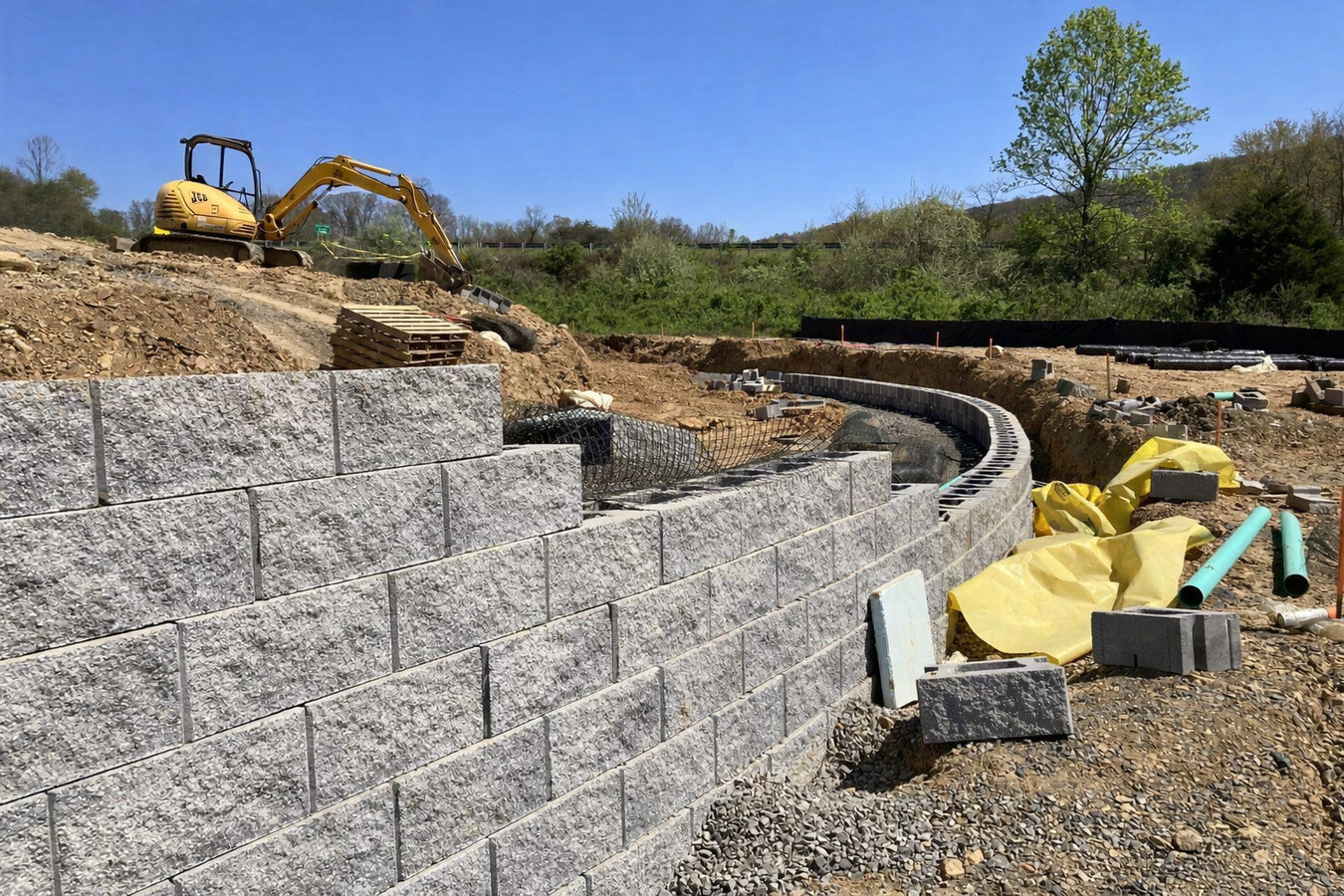
Sloping yard, eroding hillside, or a failing old wall? We build retaining walls for Walnut's clay soil and hillside lots, with permits, drainage, and HOA paperwork all covered.
Retaining wall construction in Walnut, CA holds back soil on sloped or graded lots to stop erosion, redirect water, and create level usable space, and most residential walls take two to five days once permits are approved and work begins.
In Walnut, a retaining wall is often not optional - it is a structural necessity. Many homes in this area were built on cut-and-fill hillside lots in the Puente Hills, and the slopes between properties or between a yard and the street put real pressure on the soil over time. A wall that was built without adequate drainage behind it will eventually lean, crack, or fail, and the clay-heavy soil here accelerates that process. The goal is not just a wall that looks solid - it is a wall with the right foundation depth, the right drainage behind it, and the right design for a region where the ground moves. If the slope connects to an area where you also want hardscape, our masonry restoration service can address any existing structures in the same project.
If the ground near a slope looks like it has shifted - soil piling up at the bottom, cracks forming at the top, or a section of lawn that seems to be slowly sliding - the hillside is not stable. In Walnut's hilly neighborhoods, this kind of movement often gets worse after the rainy season when clay soils have absorbed water and become heavy. Catching it early means a simpler, less expensive fix.
A retaining wall that is starting to lean forward or has visible cracks running through it is telling you it is under more pressure than it can handle. This is especially common in older Walnut homes where walls were built without adequate drainage behind them. Do not wait for it to fall - a leaning wall can collapse suddenly and damage whatever is below it, including fences, patios, or parked vehicles.
If water collects near your foundation or cuts channels across your yard during or after a rainstorm, your slope is not directing water away properly. A retaining wall with built-in drainage can redirect that flow and protect your home. Walnut's rainy season - typically December through March - is when this problem becomes most visible and most urgent.
If you want to add a flat usable area to a yard that currently slopes, a retaining wall is how that gets done. The wall holds back the uphill soil so the area in front of it can be leveled and used. Many Walnut homeowners discover this need when they start planning a backyard renovation and realize the slope makes the project impossible without one.
Every retaining wall project starts with a proper foundation - excavation to the right depth, compacted gravel base, and a drainage plan behind the wall before the first course of block or stone is set. That base work and drainage design are what separate a wall that holds for 50 years from one that starts to lean after a few rainy seasons. We work with concrete block, natural stone, and poured concrete, and we match the material to the height of the wall, the slope conditions, and the look of your property.
For walls that require an engineered design - which is common on Walnut's steeper hillside lots - we flag that requirement upfront and factor the engineering cost into the estimate before you sign anything. If the project also involves creating a level surface in front of the wall for a patio or walkway, our concrete block walls service can extend the project to include boundary or privacy walls in the same materials and style.
The most common choice in Walnut - strong, durable, and suitable for a wide range of heights and soil conditions.
Best for homeowners who want a more organic look that blends with hillside landscaping and garden beds.
Suited for engineered designs on steep slopes or when a structural engineer's specification calls for cast-in-place construction.
For walls that have failed, leaned, or cracked beyond repair - full demolition, hauling, and new construction.
Walnut sits in the Puente Hills area of the San Gabriel Valley, and a significant number of homes here were built on graded hillside lots with noticeable elevation changes between the street, the house, and the backyard. That terrain is part of what makes Walnut different from the flat suburbs to the west, but it also means retaining walls are part of the landscape in most neighborhoods. When those walls were built in the 1970s and 1980s without adequate drainage behind them, the clay soil has had decades to build up pressure - which is why failing or leaning walls are a routine call in this area. Homeowners in Chino Hills, CA deal with similar hillside and clay soil conditions, and the same design principles apply across the region.
The rainy season - typically December through March - is when retaining wall problems become most visible. Water saturates the clay soil, the pressure behind a wall spikes, and small issues that were invisible in the dry season become urgent ones. Spring is when many Walnut homeowners call us after watching their slope move during winter rains. Working in nearby West Covina, CA and across the San Gabriel Valley, we see the same seasonal pattern and design for it from the start rather than patching it afterward. The University of California Cooperative Extension documents how expansive soils behave in Southern California and the drainage measures that protect structures built on them.
When you reach out, we ask basic questions about your yard: where the slope is, whether there is an existing wall, and how tall the new wall needs to be. For most retaining wall projects in Walnut, a site visit is necessary before we can quote. We respond within 1 business day.
We visit your property to assess the slope, soil, drainage, and site access. Within a few days you receive a written estimate covering labor, materials, drainage work, and - if applicable - the permit fee. No verbal estimates for a project of this scope.
For walls above the height threshold - common on Walnut's hillside lots - we submit the permit application to the City of Walnut's Building and Safety Division. Plan review typically takes two to four weeks. If your community has an HOA, we assist with that submission as well.
Work begins with excavation and base preparation, then the wall goes up course by course with drainage material behind it. A city inspector may visit during construction. After final sign-off we backfill, grade the soil, and clean up the site completely.
Written quote, no obligation. We respond within 1 business day.
(909) 546-5193Walnut's clay soil swells when wet and shrinks when dry, and that pressure is the most common reason retaining walls here fail within a few years. Every wall we build includes a drainage plan - gravel backfill and a perforated pipe - so water moves away from the wall rather than pushing against it. The National Concrete Masonry Association covers these drainage standards in its retaining wall design guides. National Concrete Masonry Association.
Most retaining walls in Walnut require a building permit through the City's Building and Safety Division. We handle the application, plan submission, and inspection coordination from start to finish. You receive all permit documentation at project close - including the sign-off you will need if you ever sell your home.
Walnut sits in a high seismic hazard zone, and taller or complex walls on hillside lots often need to meet earthquake-resistant design standards. We are familiar with these requirements in the San Gabriel Valley and build accordingly. If an engineered design is required, we flag that before the estimate is signed - not after.
We have worked on hillside properties throughout Walnut and the surrounding San Gabriel Valley since 2019. That means we know the soil conditions, the permit office, and the HOA communities in this area - details that matter when your yard and your home are on the line.
Retaining wall work in Walnut is not the same as flat-land masonry - it requires specific knowledge of the soils, the slopes, the permit process, and the seasonal pressures that make or break a wall over time. That is the experience we bring to every project in this area.
Restore existing masonry structures near your retaining wall that have weathered or shifted over time.
Learn MoreBuild property boundary or privacy walls using the same block materials as your retaining wall for a unified look.
Learn MoreSpring slots fill fast - reach out now to schedule your site assessment and lock in your project date.